Company
The company behind CellCount.
Vitr was founded in Oslo to make one of the most repeated measurements in a biology lab into one a lab can stand behind, without asking the lab to buy an instrument it does not need.
Why
No two counts agree.
Counting cells is everyday work: how many are alive, how many are dead, how many per millilitre. It is also one of the least reproducible measurements in the building. Published studies put the spread at about 5% when one lab re-counts the same beads, 14.6% between labs counting beads of a known concentration, and roughly 20% between two blinded experts counting the same cell cultures. A great deal of downstream work rests on that number.
The usual answer is a benchtop counter with its own cassettes, its own consumables and its own opinion, and the lab keeps the hemocytometer anyway. We took a different view. The microscope on the bench is a perfectly good instrument. What was missing was a reader that counts the same way for everyone, shows its work on the image, and keeps a record.
That reader is CellCount. The figures above, with their sources, and the benchmark against a leading automated counter are on the validation page.
What we believe
Three things we will not compromise on.
The instrument you already own
No benchtop unit, no cassettes, nothing to reorder. A camera on the microscope port, a phone at the eyepiece, or the files you already have. Everything else is software, and it runs in a browser.
Nothing is final until a person accepts it
We never ask anyone to trust AI blindly. Every cell the model finds is marked on the lab’s own image, every call can be overruled, and the count is not final until the person who knows the sample signs it off.
A number with a record behind it
A count that cannot be checked later is an opinion. Each sample is dated, accepted by a named person and sealed with a hash, and it leaves as a results document or an export bundle of the images with their overlays.
Founders
Three founders, two offices.
Oslo covers Europe; Seattle covers North America. Most labs start with a call and a demo on their own samples, with whoever is closest.
 Oslo, Norway

 Seattle, USA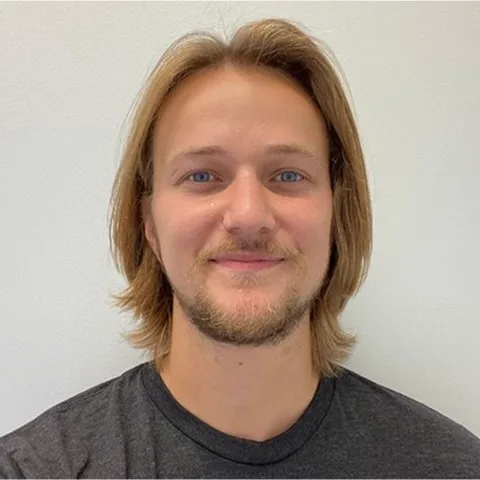
Supported by





The legal entity
Vitr is our brand. The company is Lowkey Vision AS.
Lowkey Vision ASGaustadalléen 21
0349 Oslo, Norway
Every agreement, the Terms of Service and the Privacy Notice name Lowkey Vision AS. The rename is a brand, not a change of counterparty.